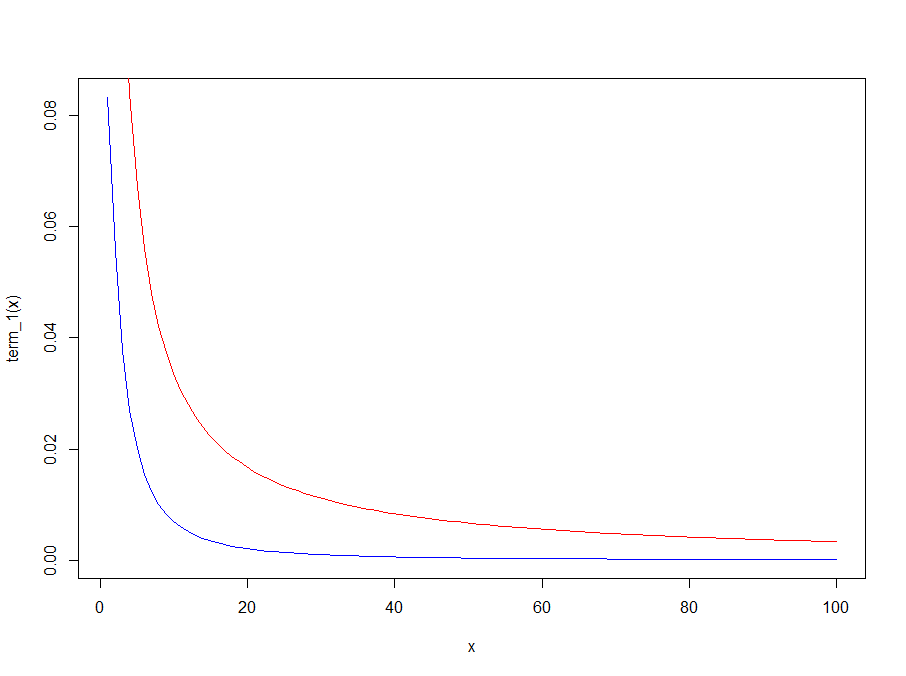
One term is n/ [(n+2) (n+1)^2]. The other term is 1/(3n).
n is positive integer, n=1,2,3,....
How to draw a graph to show the first term is always smaller than the second term?
One term is n/ [(n+2) (n+1)^2]. The other term is 1/(3n).
n is positive integer, n=1,2,3,....
How to draw a graph to show the first term is always smaller than the second term?
do square brackets have any special meaning in this notation ?
sorry, I should make it clear. square brackets doesn't have any special meaning. The numerator is n. The denominator is (n+2) (n+1)^2